

What does it look like to leave one path, and step into something that feels more true and more necessary?
María Murmis shares her decision to leave a global career and return to her family's farm, where she is building a model that integrates biodiversity, agriculture, and community.
What began as a personal shift has become a broader reimagining of what farming can be: one that responds to the realities of our time.
This is a conversation about land, legacy, and the work of building systems that can hold both conservation and production.
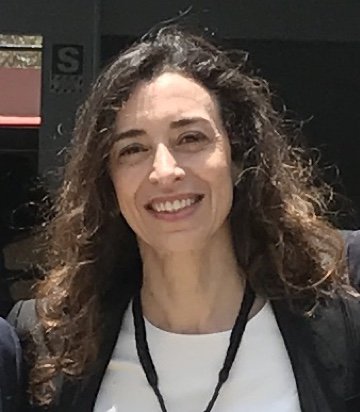
Maria Murmis
Agricultural Producer & Former Environmental Consultant
María R. Murmis is an Argentine-Canadian environmental practitioner with a background in economics and energy and resources. After years working on environmental and social aspects of development projects, she returned to her family's farm in Argentina. Her work now focuses on integrating conservation with agriculture, restoring ecosystems, and building a model for sustainable land stewardship that connects family, farming, and biodiversity.
What we explore in this conversation
- ✦ Letting go of an old professional identity while still becoming the new one
- ✦ Trading a large, hard-to-measure global system for a farm-sized system where she could actually see change happen
- ✦ What restoring a native vegetation corridor taught her about how quickly land responds when management changes
- ✦ Leadership as setting an example rather than persuading through opposition, and the "seed" model of influence
- ✦ Regeneration as ongoing management and daily trade-offs, not a perfect or final state
- ✦ Becoming a manager after decades as an independent consultant, and the discipline of staying focused
- ✦ Finding the people who were already thinking the same way, and the courage it took to stop being careful
I went to a smaller scale where I had control, which was my family farm.
— Maria Murmis, Episode 03
We know what we need to do, but we're not doing it.
— Maria Murmis, Episode 03
That seed was there. That person had the potential.
— Maria Murmis, Episode 03
From this episode
Credits
Graphic Design: Maggie Famiglietti
Video & Audio Production and Editing: Raul Zahir De Leon, Weald Studio
A Conversation with Maria Murmis
This transcript has been lightly edited for clarity and readability while preserving the spirit and substance of the conversation.
Shannon
Most environmental work happens at a distance: consulting, advising, influencing from the outside. Maria Murmis spent years doing exactly that, building a global career in environmental practice. Then she made a different kind of choice, to return to her family's farm in Argentina and work from within the system that matters most, the land itself. What emerged is a reimagining of what a working farm can be, where conservation and production aren't in tension but in conversation, and where restoring land means restoring memory, lineage, and place. This is a conversation about what becomes possible when you stop working on a system from the outside and start building from within it.
Shannon
Maria, welcome. It's so wonderful to see you and to have some time together today.
Maria
Thank you for having me.
Shannon
I want to start by hearing a little about how you introduce yourself. For listeners who might just be meeting you, how do you introduce yourself and the work you do in the world?
Maria
That's something I'm still working on, because I'm making a transition. I introduce myself now as an agricultural producer working toward sustainable, regenerative production, and a former consultant in environment and development.
Shannon
Say a little more about what makes it hard to introduce yourself, or what it means that you're still working on it. I think that's something a lot of women experience as they move through their leadership journeys.
Maria
The first thing is that I'm in the transition, although I've been doing this for a couple of years now, almost a year since I left consulting. It's hard to let go of your former identity. It's not until recently that I realized I was definitely no longer a consultant in environment and development, even though I had it in me, and that now I'm a farm manager and an agricultural producer. That's something I have to remind myself, even though I'm very happy doing what I'm doing.
There's another aspect too. I was always working in places that weren't exactly conventional, that didn't fit a pre-established category. I worked in industry and environment, as an environmental consultant, and I worked for industry directly at times. I liked being in productive activities and trying to do things right environmentally within them, but that didn't put me in a very comfortable place, because people doing productive activities are thinking in terms of how much they produce and profit, while people in environment may think you shouldn't be intervening at all. I was always in that middle place, which made it a little difficult to identify myself.
I studied interdisciplinary environmental studies, at Berkeley, in a program called the Energy and Resources Group, which is very keen on tracking where people end up because they don't have a conventional degree. I always ended up in places where I wasn't, say, a corporate lawyer, where everyone knows what that means. I'm still struggling with that.
Shannon
When you look back at this path, from environmental consulting and international development to now running your family farm, what were some of the early signs that regenerative production would matter to you?
Maria
I think the earliest sign was in third grade. A substitute teacher had us write essays on whatever we wanted, and I wrote about how the city and the country depend on each other, how some things are produced in the country and need to go to the city, and some things are produced in the city and need to go to the countryside. It was very celebrated, the teacher had me read it in front of the whole class. So I might have had this in me since third grade. I always loved my farm.
At eleven I went to live in Canada, then Ecuador, a little in France, then studied in the US. My farm was always something I wanted to come back to. There were times I didn't feel very Argentinian anymore, because I hadn't lived here long enough, but my farm was my home in a way my country wasn't, quite. I'd lost a little of that identity, but my farm remained. Deciding to study environmental studies, I think that was always cooking, that I'd come back and try to produce here in a more sustainable way.
Shannon
Can you point to a particular moment when it felt clear that this was the direction, that this was next?
Maria
I was very enthusiastic about consulting for a long time, I really believed in the work and wanted to help the world be more sustainable. But at some point I felt I wasn't having the impact I expected. I was working in global environmental issues, so my impact was one grain of salt in a bigger picture, and I became disillusioned watching where the bigger picture was going. We're at the 30th COP and still not reaching objectives.
There's one example that was almost the moment I realized I needed to look elsewhere. We were invited to participate in a side event of New York Climate Week, and Argentina was invited to send a keynote speaker, but it needed to be at a minister or ambassador level, not me. No one confirmed, and someone else became keynote speaker. We had been working for years to make sure Argentina had a place and credibility in these groups, and I realized I was fighting a battle I couldn't win without support from higher-up policymakers. That was a turning point for me.
Shannon
What did leaving that world of consulting make possible when it came to impact?
Maria
Not total control, nothing is a hundred percent under one's control, especially the weather, but it gave me a scale where I could determine the project and what I wanted to do, and I felt I could have impact within that. The impact is something that never ends, though. You're part of a bigger picture, and for these things to really create change at a higher scale, it needs to happen elsewhere too. I'd like my project to become a model that other people can adapt, with changes for their own context.
Maria
My original plan was regenerative agriculture and ranching, ranching is easier to make regenerative than agriculture, but I want to do both. Then I started seeing a bigger picture of what the farm meant as a symbol of Argentina's history. I started restoring things I found on the farm from the old days, and we started interacting with local schools, not just on the environmental side but mixed with history about the place. That's expanded further than I expected, the local municipality has taken notice too. There was a certain loneliness before, where I felt I wasn't aligned with the way things were going in the institutions. Now I'm finding I'm not lonely anymore. You start finding people who are like you, and you start building something bigger.
Shannon
You've discovered how quickly land can respond when the management of it changes. Can you share more about that, and how working directly with the land has changed how you think about sustainability, trade-offs, and leadership?
Maria
It was touching to see, when we planted the native corridor, the plants were tiny, baby plants, and already we started seeing native wildlife: butterflies, pollinators, bird species. That was mind blowing, to see nature return when you give it a chance, to see a bird nesting in the exact tree it's known for nesting in. Right now the corridor is 250 meters with a path for visiting, but I want to do it through the whole farm eventually. In times of doubt, those moments come back, it happens, it works, and that reinforces both the project and my own self-confidence.
Maria
There are real trade-offs, because you're working with nature and you also want to produce. You can't make the whole farm safe for wildlife, because then you can't produce, so you're making a selection, a choice, with knowledge, having thought about it. I learned this in my own garden too, some flowers and plants would advance because they loved the place, and I kept rescuing and replanting them elsewhere, but at some point I had to weed and not conserve everything that was advancing, even native species. You can't just let everything advance. That's a life lesson, we're part of nature too, and we're advancing. You've got to plan, correct, and decide, and some decisions aren't easy, but they're for the higher good.
Maria
There's no ideal, pristine natural system if you also want to produce food. National parks and protected areas matter for the things that truly can't coexist with production, like a puma. But there's a common misconception that farming is good and cattle are bad for climate reasons. For biodiversity and conservation, cattle grazed in a planned way are often more compatible with maintaining natural land than agriculture, which substitutes the environment entirely. There's no one solution, because we're working with nature in different places, with so many parameters, climate, latitude, rainfall, social structures, farm size. Conventional agriculture applies the same package everywhere, in Argentina, Africa, North America, and that's part of why we're sacrificing nature, and eventually our own health.
Shannon
What has it been like for your leadership, stepping into this work relative to consulting?
Maria
The first thing is very practical: most people who farm are men. The culture is still very male, even though there are plenty of women farmers, so having people listen to me because they were my employees was a challenge I had to learn. In consulting, the soft power of international institutions worked in a certain way, I never felt uncomfortable saying what I thought. On the farm, I had to learn a different kind of firmness, not violent or mean, but firmer.
My leadership now is more about setting an example, and having people gather around that. Those are the people I think I can convince, or show something to, and they become enthusiastic, other farmers, and children too, like when I give a talk at the local school and kids ask a lot of questions, or people ask to do an internship or visit the farm. It's not an activist type of leadership, going to the municipality and demanding change, which is an important role too, just not mine. Mine is convincing through evidence, through the data I'm gathering at the farm.
Maria
I come from consulting, I haven't been a manager my whole life. I was mostly independent, an advisor, I told people what I thought, wrote reports, I was my own company in a sense. Being a manager is totally different, and it's not surprising I've had to learn it to keep my focus. I tell myself sometimes: you are a manager now.
Shannon
It sounds like there's a real web you're building as you move toward this focus on the farm.
Maria
Exactly, and it's positive, I want to nourish it, but I've also decided this farm has to prove that conservation and regeneration can be profitable. So I have to put some order in how I go ahead with the project. Sometimes I ask myself if I'm dispersing too much, chasing spin-offs, connections with universities, comparative studies with people in Canada who think along the same lines. I have to keep the main focus and find ways to do these things with other people, rather than trying to do it all myself.
Shannon
You've said your influence works like seeds. Can you say more about that?
Maria
When you share a concept or show something, like the native corridor, it can start working in other people's minds. It's not about changing people's minds through opposition, it's about making them see the potential that was already there.
Maria
There are people totally closed off to this, and I'm not going to influence them. But sharing information and reasoning, backed by what I've seen and the data I have, that works on the people who have the seed already. Some people respond to data, others just to seeing something differently, like realizing they could plant a native tree instead of an exotic one. Talking with a friend about it once, I told him native trees don't need protecting from ants and do fine in drought or floods, since they're used to the area. He'd assumed exotics were easier, but they need care for years because they're not adapted. That's the kind of thing that can shift how someone thinks, just through talking and sharing what you've actually seen work.
Shannon
What do you think is most needed right now in leadership and systems change?
Maria
Taking ourselves seriously about what we already know needs to be done, and having the courage to act on it, even though there are interests against it. Not evil interests, just people thinking of their own immediate interests. We know what's happening with climate change, the science, the models, the peer review. We know. Let's act.
Shannon
How do you find your people, the ones who are thinking the same way you are?
Maria
I think it's about manifesting who you are and what you think, even when there's a fear of saying things that differ from the mainstream. I was probably more careful than I realized, working in bigger institutions, it's intimidating. But letting go of that tendency to hold back, to not irritate people, that's worked. It feels good, because it's how I started making these connections and finding the people who were thinking the same things I was. I wasn't the only one. I just wasn't connected to the other people who were frustrated within that very large system.
Shannon
What does it feel like to let go of being careful?
Maria
It feels good, because it's worked. There have been times I've gone home wondering why I said something, wishing I'd said it differently, and I've learned that's going to happen sometimes, and it's okay. Even in those moments, someone might run into you six months later and say, I heard what you said, I want to connect, because I'm doing something similar. It's always worth showing what you think and what you like, in the right measure and context.
Shannon
Thank you so much, Maria, for your time and for sharing your story. The work you're doing is incredible, and I know we're going to keep hearing about it. Thanks for listening to Field Notes from the Future. This podcast is one expression of Aurora Collective, a platform where women leaders are helping coalitions and changemakers turn complexity into clarity and vision into action. If today's conversation sparked something for you, share this episode, subscribe, and keep imagining with us. You're not alone in this work, and the future is already on its way.